Saturday, November 19, 2011


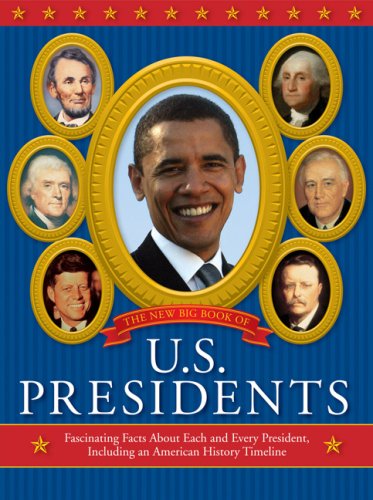
The New Big Book of U.S. Presidents: Fascinating Facts about Each and Every President, Including an American History Timeline



Pirates of the Caribbean: At World's End (Two-Disc Limited Edition)

- Condition: New
- Format: DVD
- Subtitled; Color; Special Edition; Widescreen; NTSC
From Michael Cunningham, the Pulitzer Prize-winning author of ! The Hours, comes this widely praised novel of two boyhood friends: Jonathan, lonely, introspective, and unsure of himself; and Bobby, hip, dark, and inarticulate. In New York after college, Bobby moves in with Jonathan and his roommate, Clare, a veteran of the city's erotic wars. Bobby and Clare fall in love, scuttling the plans of Jonathan, who is gay, to father Clare's child. Then, when Clare and Bobby have a baby, the three move to a small house upstate to raise "their" child together and, with an odd friend, Alice, create a new kind of family. A Home at the End of the World masterfully depicts the charged, fragile relationships of urban life today.
From Michael Cunningham, the Pulitzer Prize-winning author of The Hours, comes this widely praised novel of two boyhood friends: Jonathan, lonely, introspective, and unsure of himself; and Bobby, hip, dark, and inarticulate. In New York after college, Bobby moves in with Jonathan and his room! mate, Clare, a veteran of the city's erotic wars. Bobby and Cl! are fall in love, scuttling the plans of Jonathan, who is gay, to father Clare's child. Then, when Clare and Bobby have a baby, the three move to a small house upstate to raise "their" child together and, with an odd friend, Alice, create a new kind of family. A Home at the End of the World masterfully depicts the charged, fragile relationships of urban life today.
With score composed by famed singer/songwriter Duncan Sheik, A Home At The End Of The World also features songs from the '60s and '70s through the '80s, including tracks by Jefferson Airplane, Bob Dylan, The Band, Yaz, Patti Smith, Paul Simon, Leonard Cohen, Laura Nyro and more. Sheik's emotional score captures the essence of the characters' journeys through their lives and the relationships they develop along the way.Adapted from the novel/screenplay of Pulitzer Prize winner Michael Cunningham (The Hours), Colin Farrell gives an inspired performance as a tragedy-stricken youth whose search for iden! tity and happiness forms the core of its unconventional friendship and romance. Its warm, admirably eclectic song-based soundtrack echoes the film's two decade arc with selections that span both era and emotion, from the innocence of Dusty Springfield's "Wishin' and Hopin'" and Yaz' infectious "Only You" to the angst-ridden classic rock-era bookends of "Somebody to Love" by the Jefferson Airplane and Patty Smith's epochal "Because the Night." The score's classical selections continue that thread with excerpts from Mozart's Cosi Fan Tutte and contemporary minimalist Steve Reich's vibrant Music for Eighteen Musicians. But it’s the half-dozen warm, introspective new tracks from Duncan Sheik that form the soundtrack's evocative emotional core, with melancholic, production-rich standouts like "Something Somewhere" infusing it with a smart, contemporary atmosphere in the bargain. --Jerry McCulleyJust when he s needed most Captain Jack Sparrow (Johnny Dep! p) that witty and wily charmer of a pirate is trapped on a sea! of sand in Davy Jones Locker. In an increasingly shaky alliance Will Turner (Orlando Bloom) Elizabeth Swann (Keira Knightley) and Captain Barbossa (Geoffrey Rush) begin a desperate quest to find and rescue him. Captain Jack s the last of the nine Pirate Lords of the Brethren Court who must come together united in one last stand to preserve the freedom-loving pirates way of life. From exotic Singapore to World s End and beyond from Shipwreck Island to a titanic battle this adventure s filled with over-the-edge action irreverent humor and seafaring myth and magic. Everything has led to this twisting turning wild swashbuckling ride in this final chapter of the Pirates Of The Caribbean trilogySystem Requirements:Run Time: 165 minutesFormat: DVD MOVIE Genre: ACTION/ADVENTURE Rating: PG-13 UPC: 786936293012 Manufacturer No: 04099100Pirates of the Caribbean: At World's End is a rollicking voyage in the same spirit of the two earlier Pirates films, yet far darker in spo! ts (and nearly three hours to boot). The action, largely revolving around a pirate alliance against the ruthless East India Trading Company, doesn't disappoint, though the violence is probably too harsh for young children. Through it all, the plucky cast (Keira Knightley, Orlando Bloom, Geoffrey Rush) are buffeted by battle, maelstroms, betrayal, treachery, a ferocious Caribbean weather goddess, and that gnarly voyage back from the world's end--but with their wit intact. As always, Johnny Depp's Jack Sparrow tosses off great lines ; he chastises "a woman scorned, like which hell hath no fury than!" He insults an opponent with a string of epithets, ending in "yeasty codpiece."! In the previous The Curse of the Black Pearl, Sparrow was killed--sent to Davy Jones' Locker. In the opening scenes, the viewer sees that death has not been kind to Sparrow--but that's not to say he hasn't found endless ways to amuse himself, cavorting with dozens of hallucinated versions! of himself on the deck of the Black Pearl. But Sparrow is nee! ded in t his world, so a daring rescue brings him back. Keith Richards' much ballyhooed appearance as Jack's dad is little more than a cameo, though he does play a wistful guitar. But the action, as always, is more than satisfying, held together by Depp, who, outsmarting the far-better-armed British yet again, causes a bewigged commander to muse: "Do you think he plans it all out, or just makes it up as he goes along?" As far as fans are concerned, it matters not. --A.T. Hurley
On the DVD
Here's something you can't say about just any DVD extras: There appears to be more of Keith Richards in the outtakes, interviews, and other special features on the At World's End disc than in the actual film. For those scenes alone, this special edition is well worth the price. Richards looks as woozy and gamey as all the rumors suggested, and answers questions he's not asked, with Johnny Depp sitting next to him, almost acting as a translator. Richards offers pit! hy comments like, "Everything I do is original, you better believe," and smiles when other cast members call him "Two-Take Richards" for supposedly nailing his scenes.
The packed second disc also includes a terrific mini-doc on how the filmmakers created the famous maelstrom, in an enormous hanger in Palmdale, California, with the ships floating 30 feet off the ground. "Just moving the Black Pearl was an enormous undertaking," says producer Jerry Bruckheimer with serious understatement. Other cool extras include "Tale of the Many Jacks," deleted scenes with great commentary, "The World of Chow Yun-Fat," a bio of composer Hans Zimmer, features on the set designers, a look at the impressive Brethren Court, and some hilarious bloopers. "You can't curse in a Disney film," deadpans Depp when a costar blurts out something blue. "See? I told him." The extras are truly as much of a rollicking adventure as the film. --A.T. Hurley
! Beyond Pirates of the Caribbean: At World’s End
Stills from Pirates of the Caribbean: At World’s End (click for larger image) 
Our Pirates of the Caribbean Store 
Pirates of the Caribbean: Curse of the Black Pearl 
Pirates of the Caribbean: Dead Man’s Chest 
Pirates of the Caribbean: At World’s End Soundtrack 
! Why We Love… Bill Nighy 
Johnny Depp Essential DVDs 

! 


